Ten little learning games for toddlers.
Every one of these was a game children played long before phones, and most of them are better on a carpet. Each page below answers the question a parent usually arrives with, says what age the game actually suits, and shows how to play it without a screen. Then, at the end, our version.
Ten games · Ages 2 to 5 · No timers, no way to lose
-
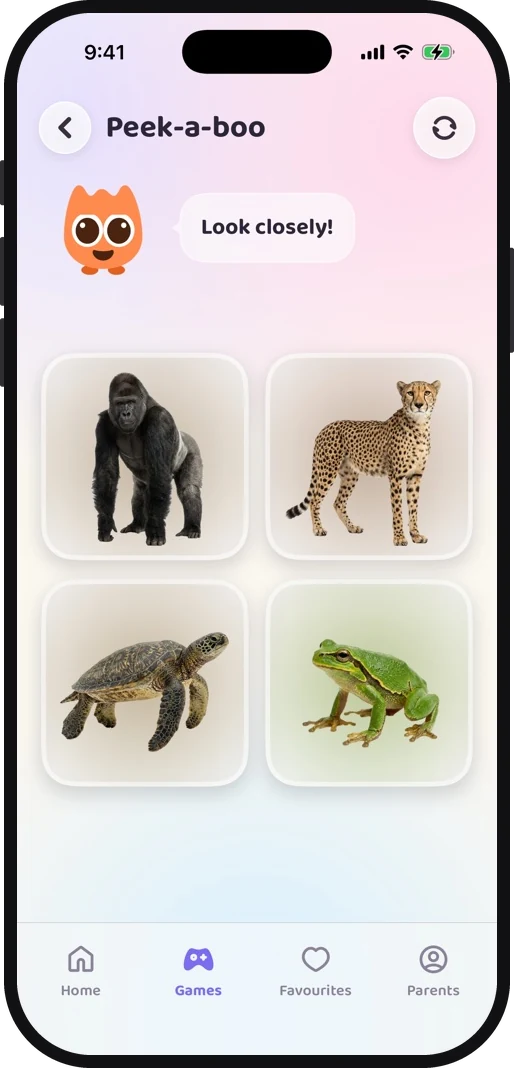
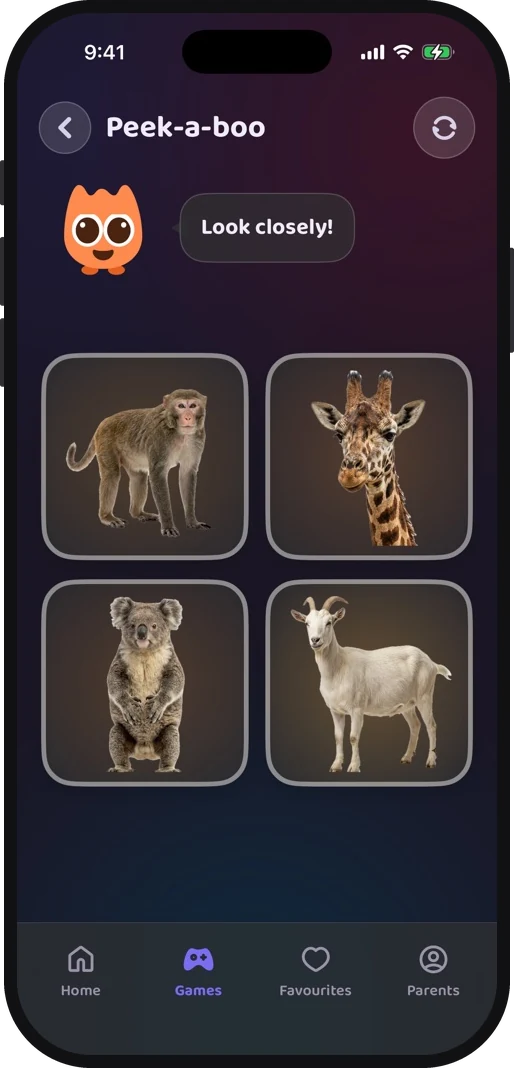 Peek-a-boo · ages 2 to 5 Why does my toddler still love peek-a-boo? → Four animals are shown and named, then they hide. Your child remembers which one the voice asks for.
 -
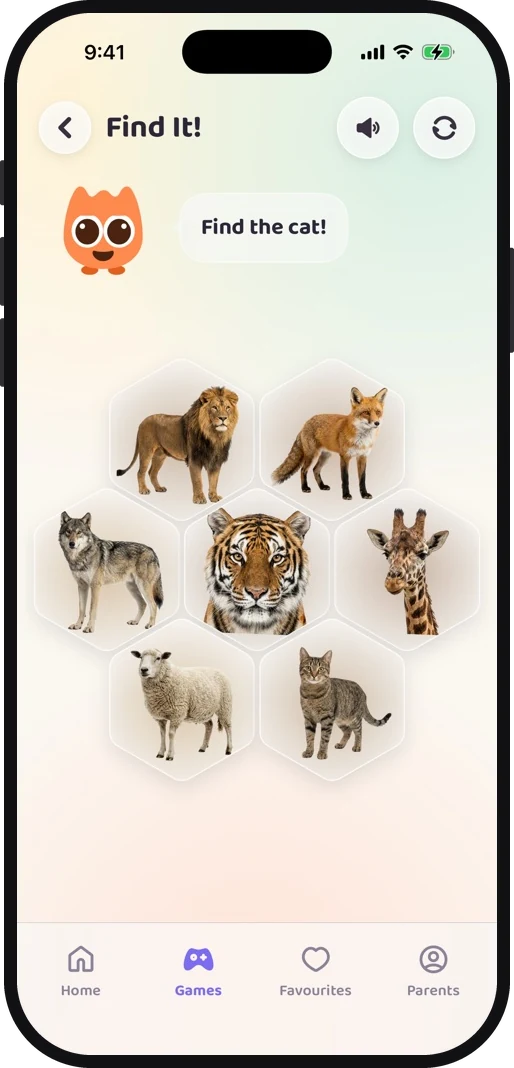
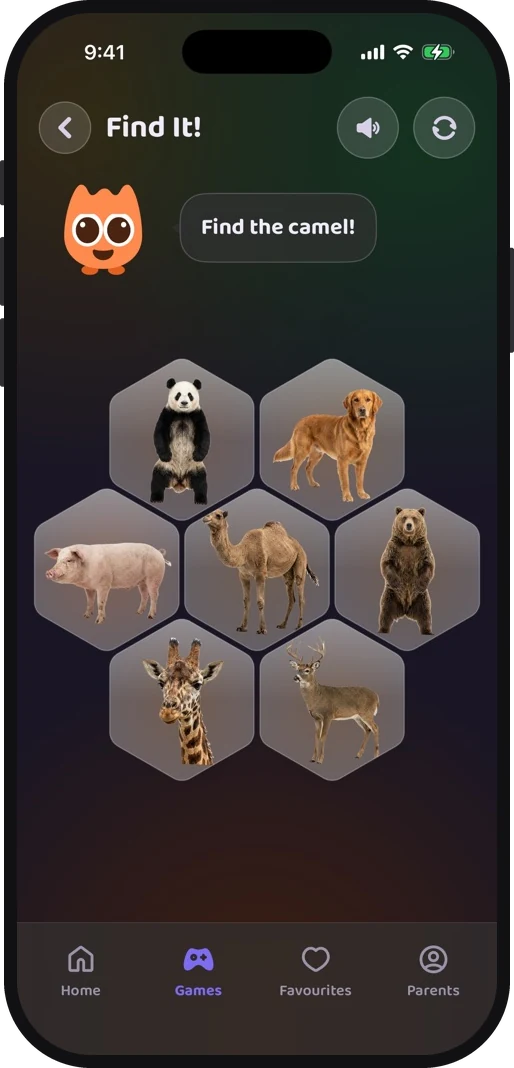 Find It! · ages 2 to 5 My toddler understands more than they can say. How do I see it? → The voice asks for one thing by name. Your child finds it among seven look-alikes.
 -
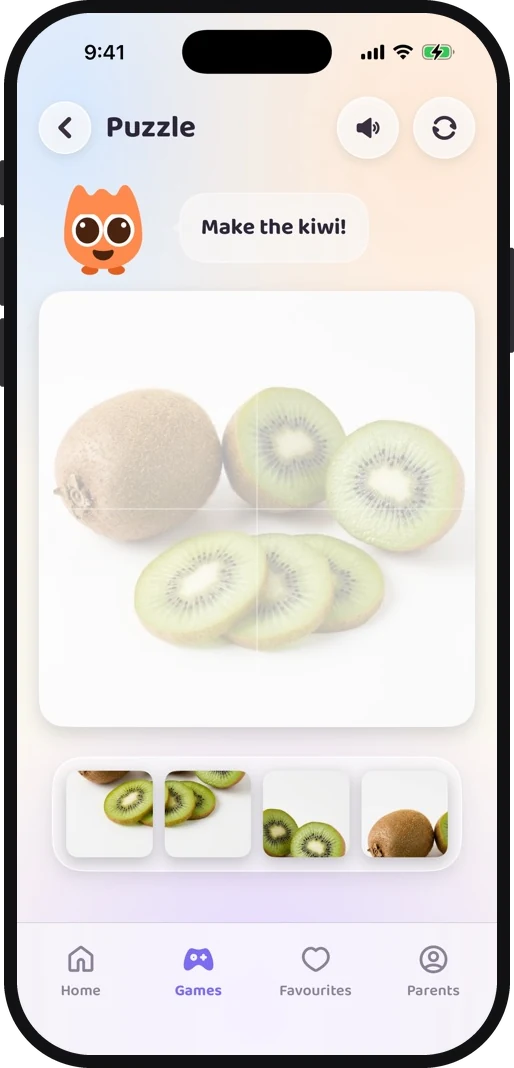
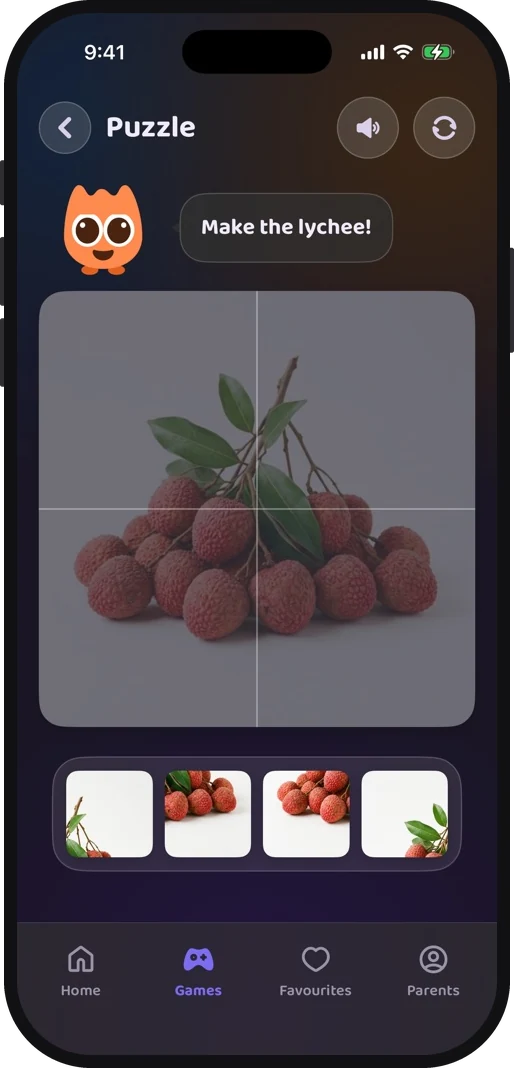 Puzzle · ages 2 to 5 How many puzzle pieces should a 2 year old manage? → A photograph in four pieces, a faint outline to fill, and a tray to drag from.
 -
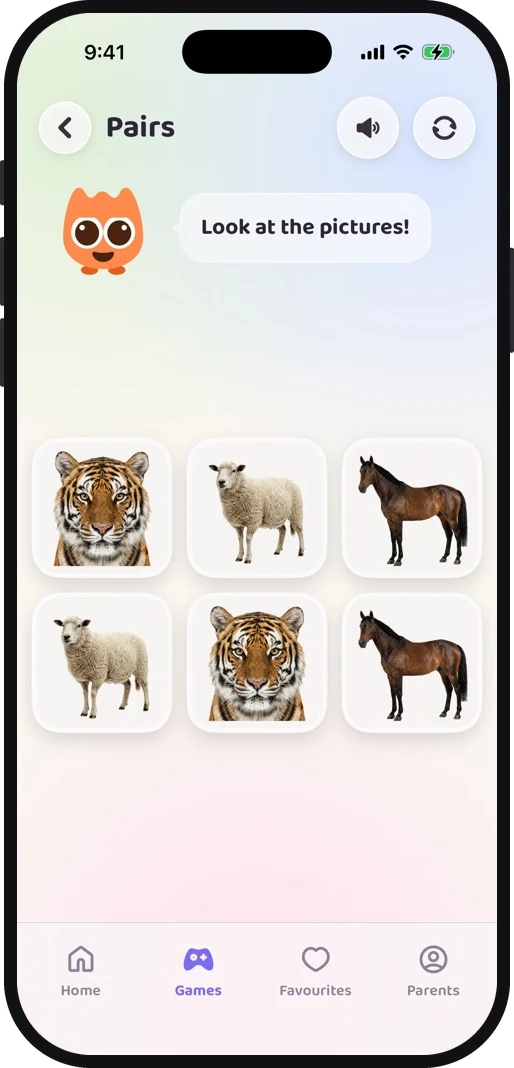
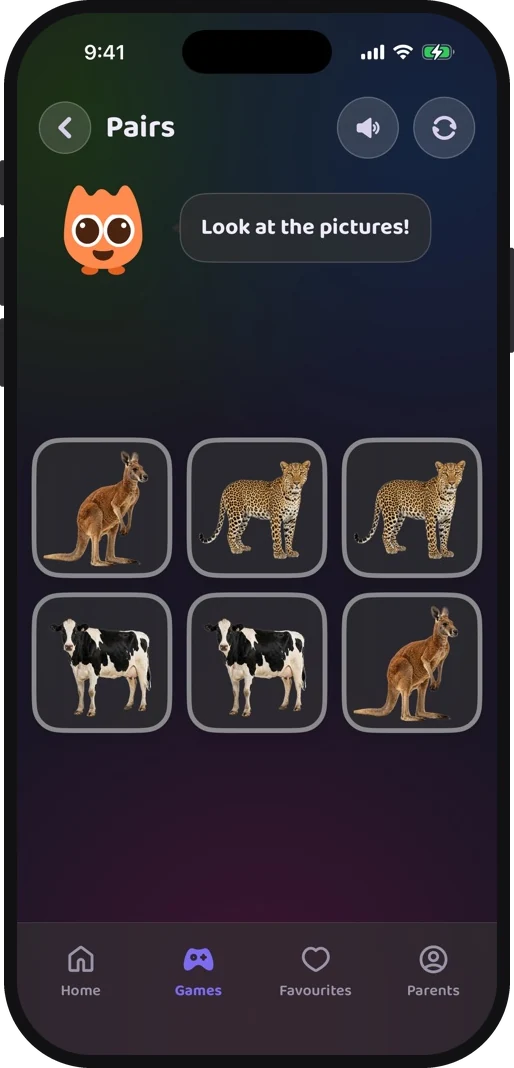 Pairs · ages 2 to 5 When can a toddler play a matching pairs game? → Every picture appears twice, face down. Flip two, and a match stays up and says its name.
 -
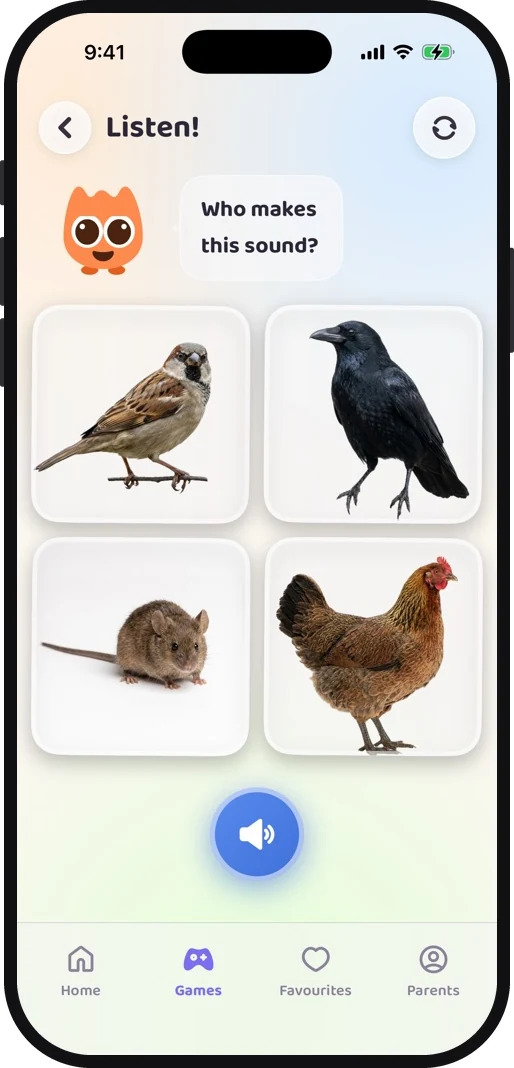
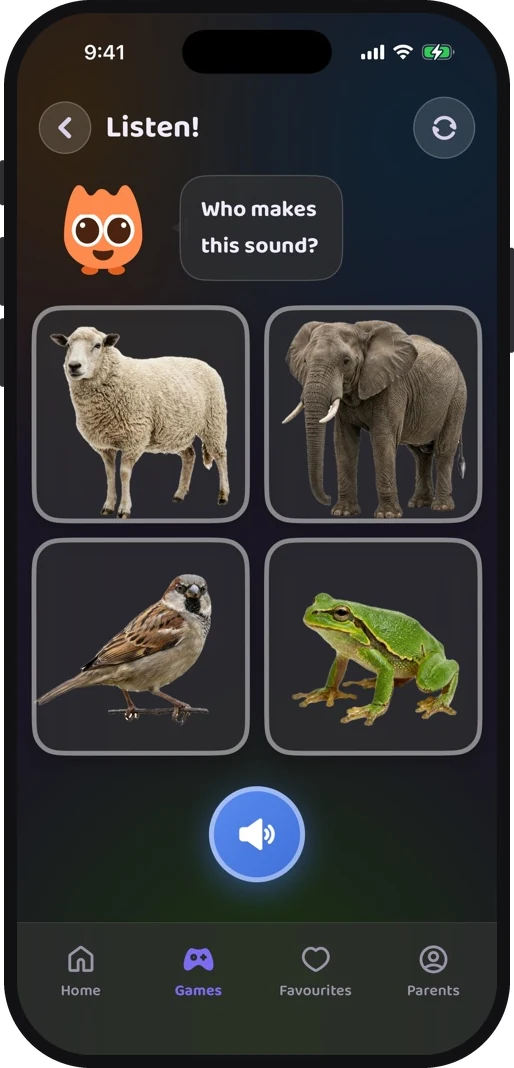 Listen! · ages 2 to 5 Why does my toddler say moo before cow? → A real animal sound plays. Your child picks who made it from four photographs.
 -
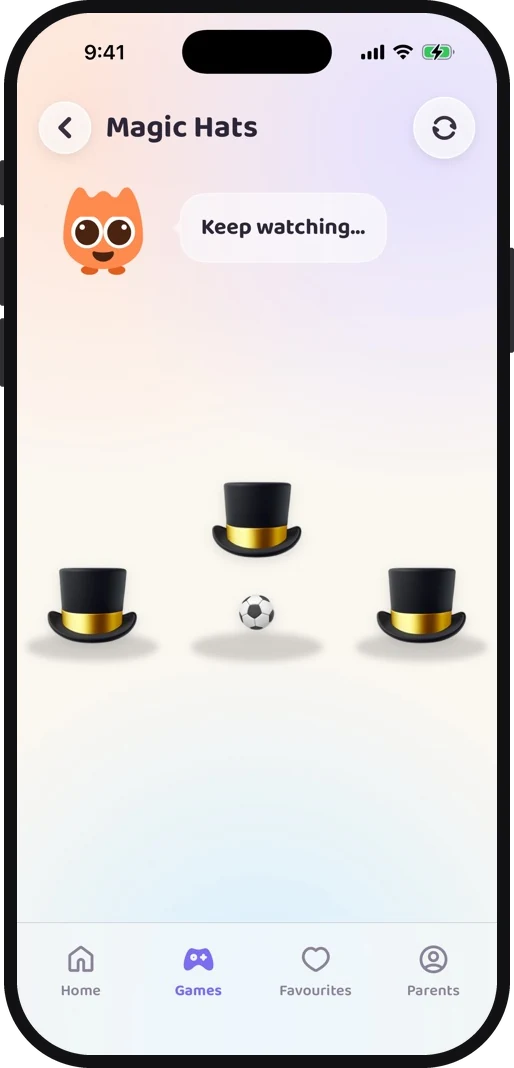
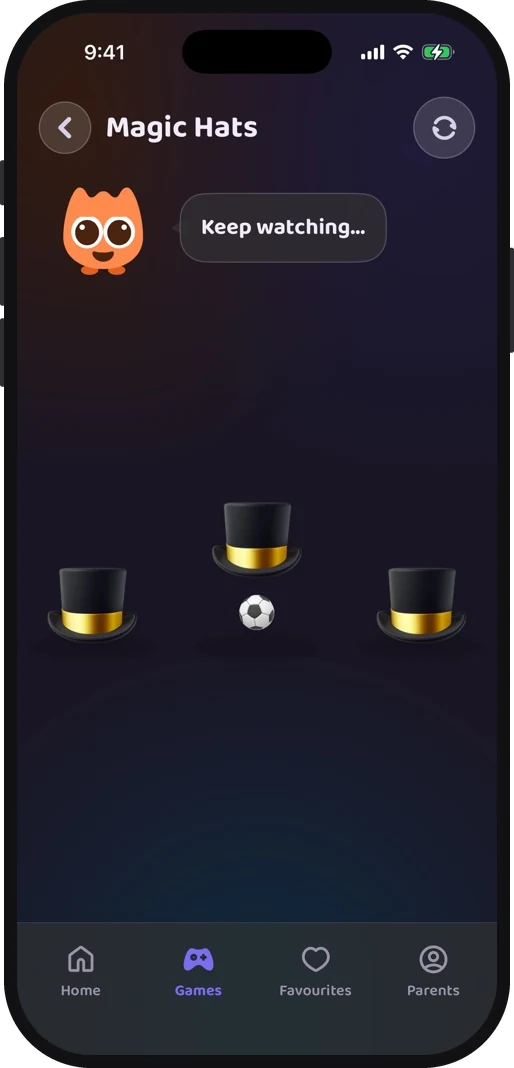 Magic Hats · ages 2 to 5 How do I help my child pay attention for longer? → A ball hides under a hat, the hats shuffle, and your child points at where it went.
 -
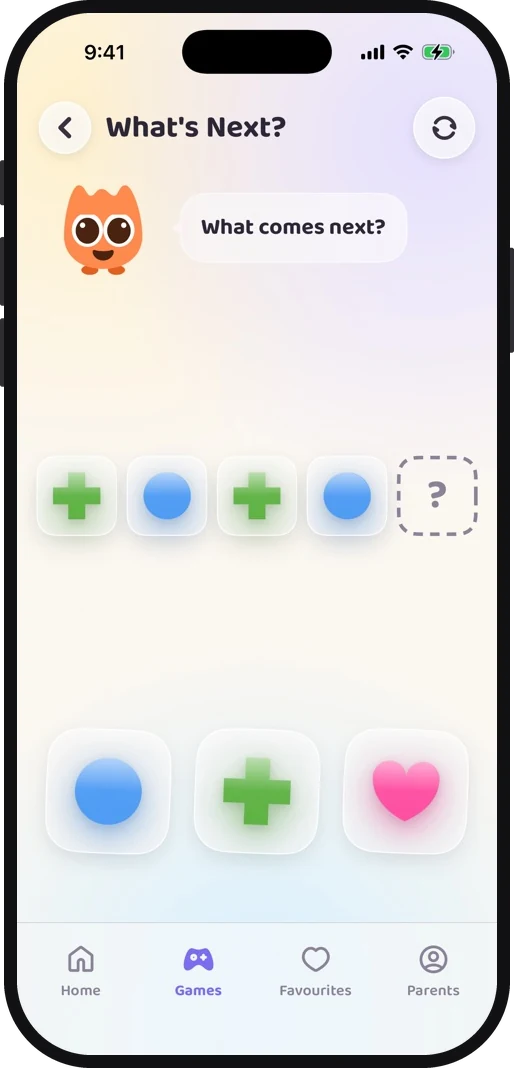
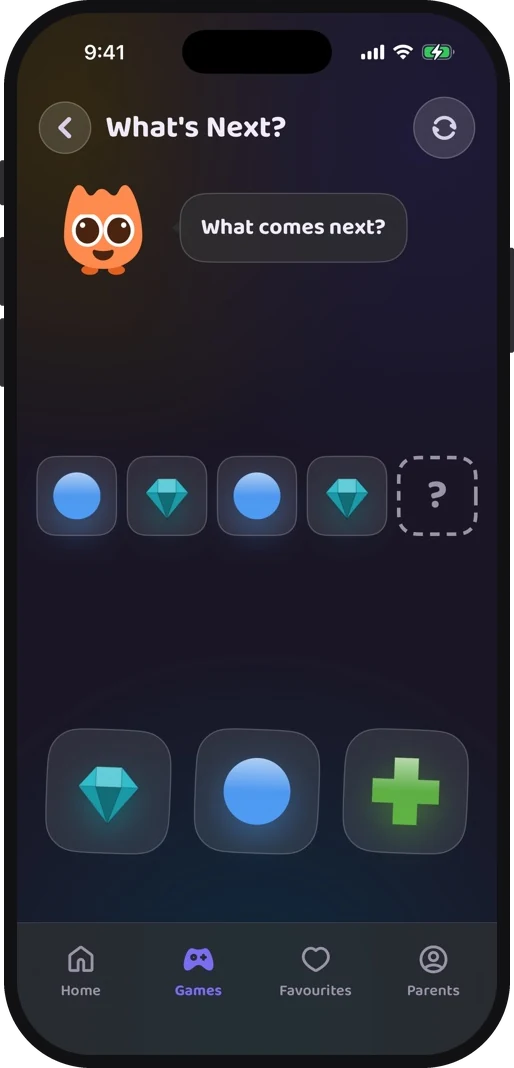 What's Next? · ages 3 to 5 Why do preschools make such a fuss about patterns? → A strip of shapes repeats and stops. Your child taps what comes next.
 -
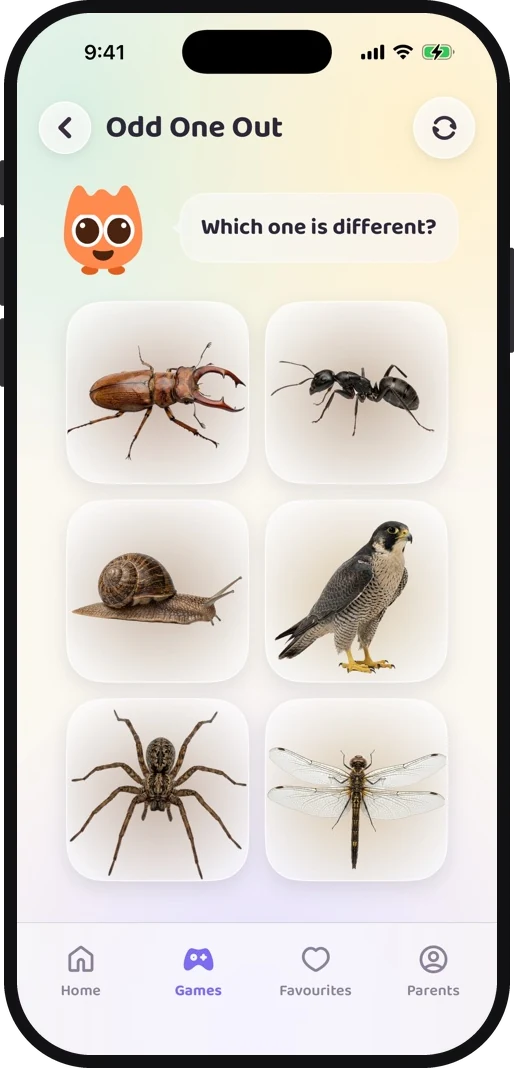
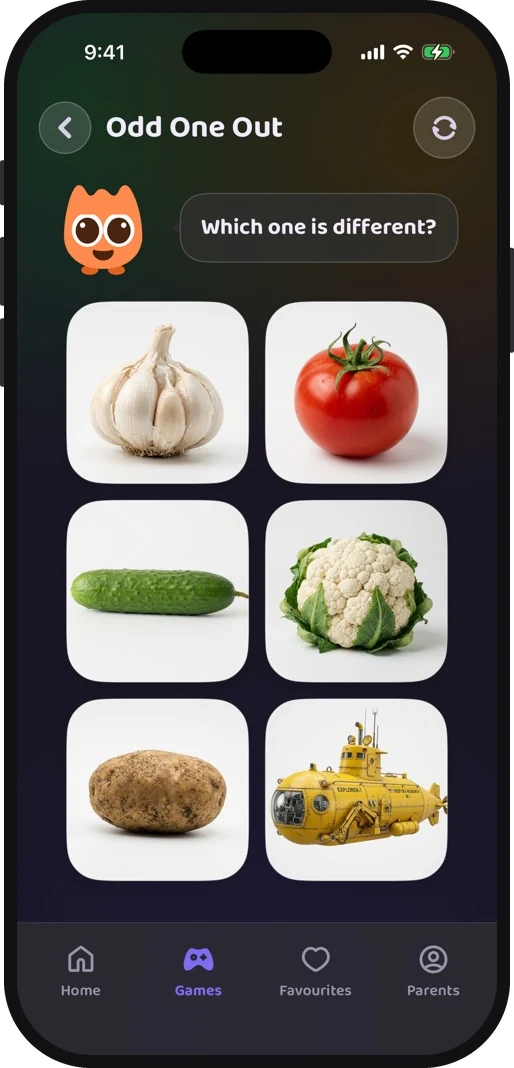 Odd One Out · ages 3 to 5 Is my preschooler ready for odd one out puzzles? → Four pictures, three from one family and one stranger. Your child taps the stranger.
 -
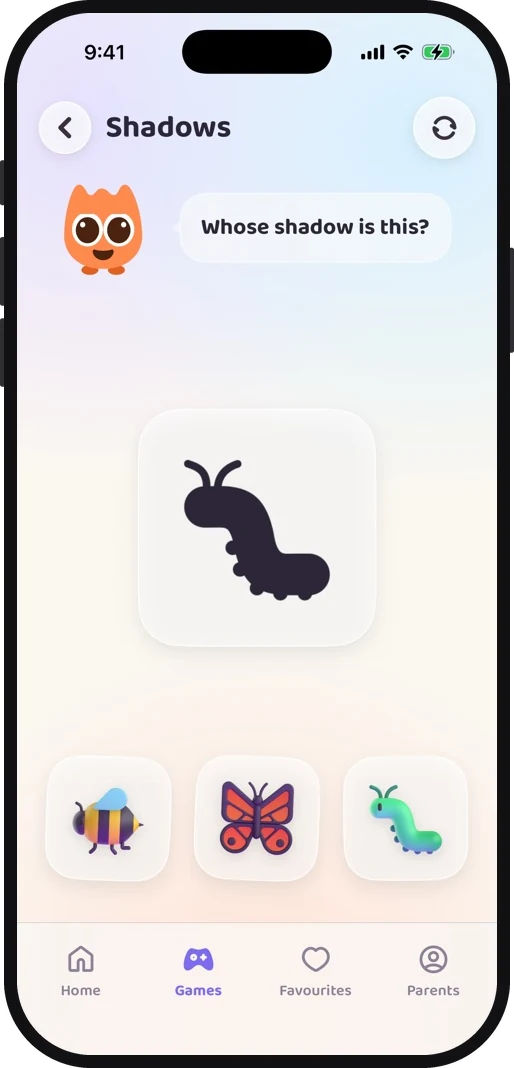
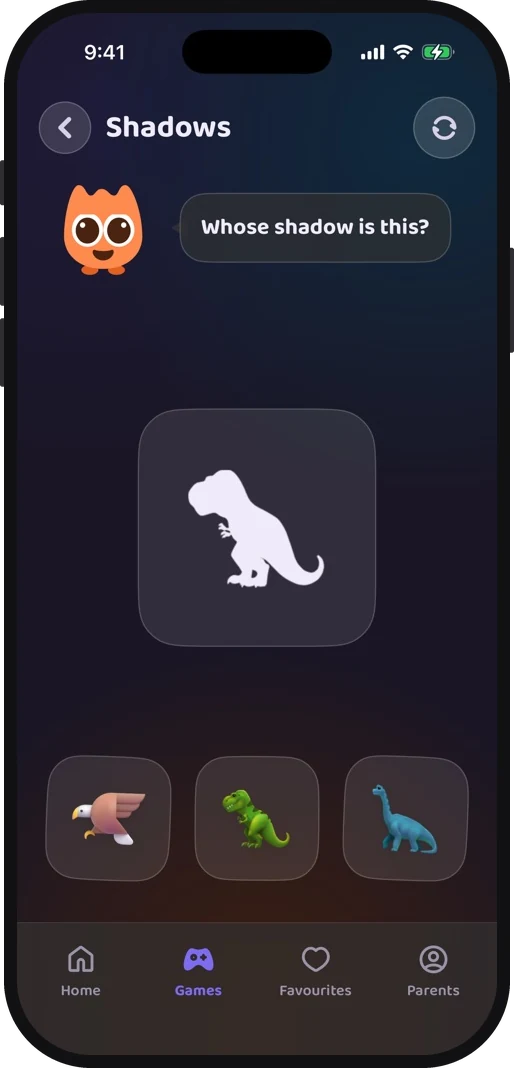 Shadows · ages 3 to 5 What is shadow matching, and why do preschools use it? → One black silhouette, a few colourful things below. Which one cast it?
 -
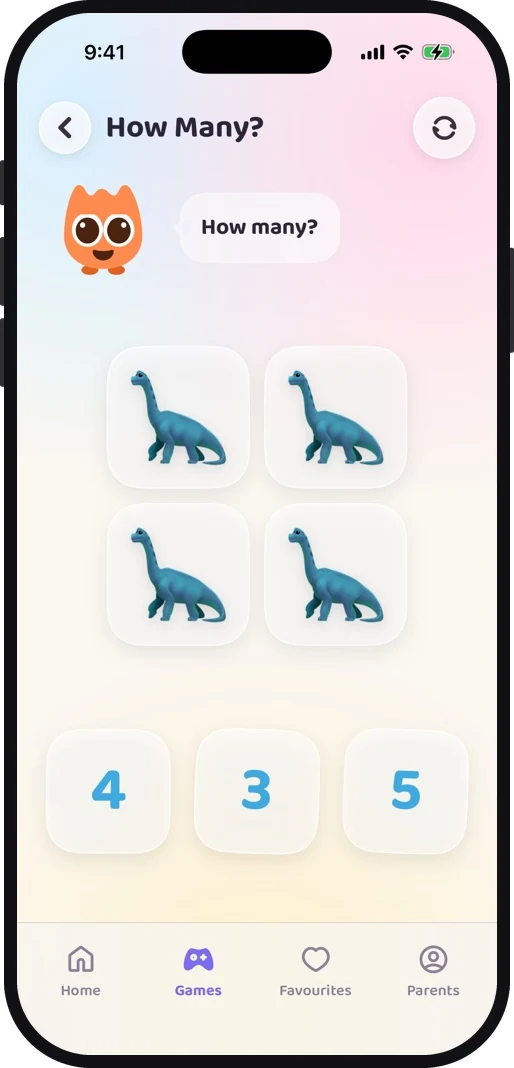
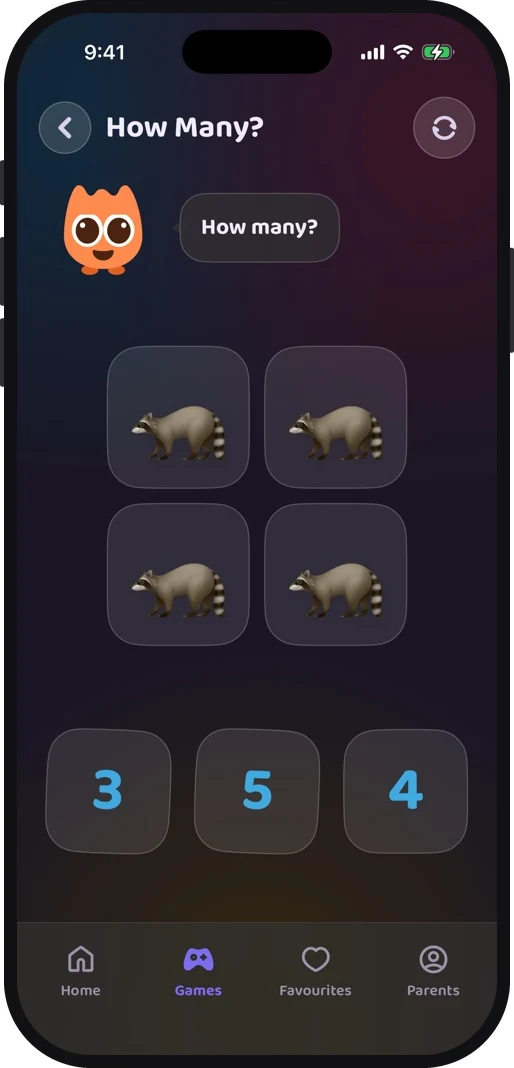 How Many? · ages 3 to 5 My toddler says one to ten but cannot count. Why? → Things pop in one at a time with a rising blip. Your child taps the number.
Worksheets to print.
What they have in common.
No timers and no game over. A wrong tap is not the right one yet, and at two most wrong answers are wrong fingers rather than wrong thinking. Difficulty moves quietly with your child and is never shown as a level, because a two year old does not need a rank.
Every game is free for four rounds a day over your first three days, which is enough to find out whether your child takes to it. After that the games are part of the subscription. There are no ads either way, nothing is collected from your child, and what the app counts stays on your phone.