Two skills, not one.
Deciding that two pictures are the same thing is visual discrimination. It arrives early: a two year old who can hand you the matching sock is doing it.
Remembering that the elephant was under the third card, four flips ago, is working memory, and that arrives later. A shop-bought memory game with twenty four cards leans almost entirely on the second skill, which is why the box gets put away after one attempt.
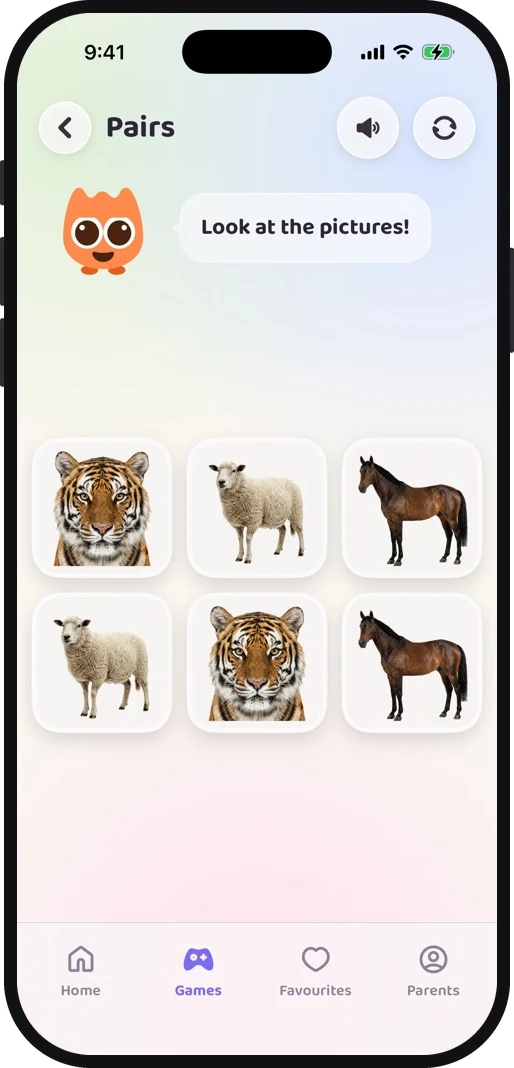
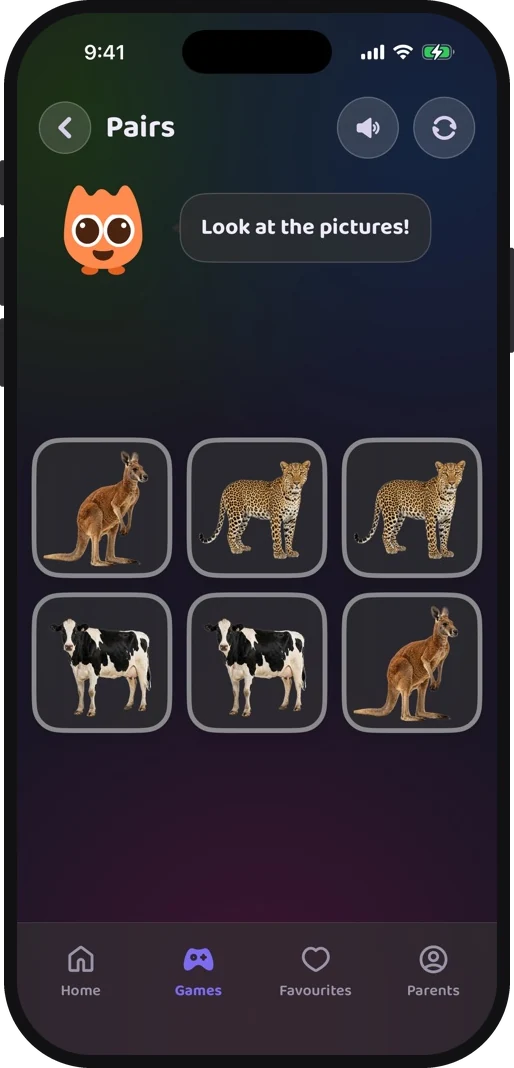
The fix is not a different game. It is fewer cards. Six cards, three pairs, played face up first, then face down.
Why matching matters more than it looks.
To pair two pictures a child has to decide what "the same" means: same shape, same colour, same thing from a different angle. That is the skill of noticing small differences, and reading leans on it hard later, because b and d are the same shape flipped.
It also does something quieter for vocabulary. A match is a good moment to name the thing, and a named match is worth two unnamed ones. Naming beats quizzing here for the same reason it does with cards.
What Wibbo's version does.
Cards lie face down, each photograph appearing twice. Two taps flip two cards. A match stays up and the voice names it; a miss flips back after a pause long enough to actually look at what was there.
The card backs are identical on purpose. Anything decorative on the back, a different colour or pattern per card, would let a child match by the cover rather than by memory, and plenty of children's games make exactly that mistake.
Clearing the board moves to a new world of pictures, so the same board never repeats twice in a row.
Play it on the floor too.
Two copies of six photographs, printed and cut, make the same game on a carpet. The printable card sets are there for this: print one set twice and you have a matching game with your child's own words in it.
Paper has one advantage a screen cannot match. Your child can hold up a card and bring it to you, and that is a conversation.
And no way to lose.
None of Wibbo's ten games has a timer or a game over screen. A wrong tap is not the right one yet, and at two most wrong answers are wrong fingers rather than wrong thinking. Right answers in a row build a streak, the best one waits in the parents' corner, and it is counted on your phone and stays there.
Difficulty moves on its own and is never shown to your child. First try wins step it up, two misses step it back, and a week away eases it down one on the next open, because a child who has been on holiday is not where they left off.