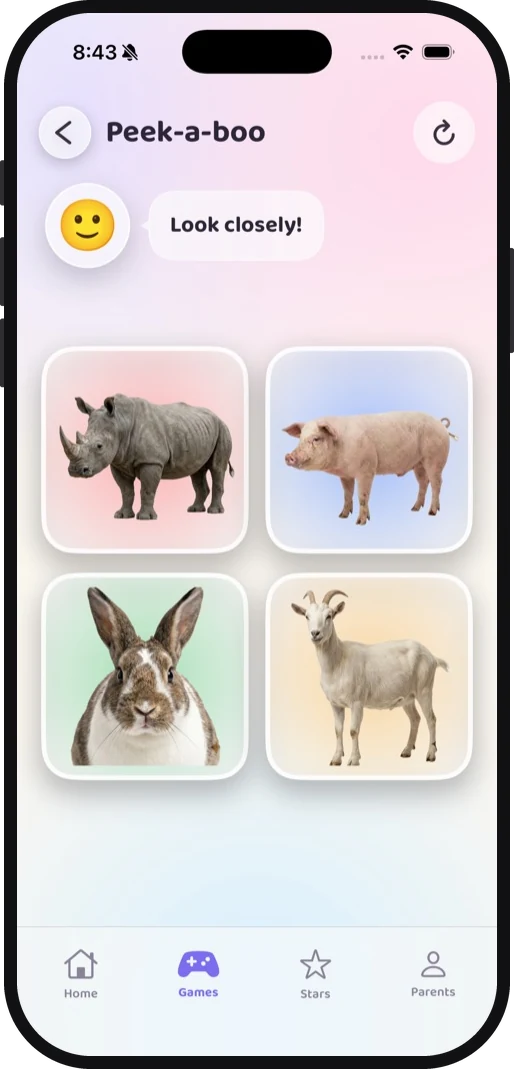
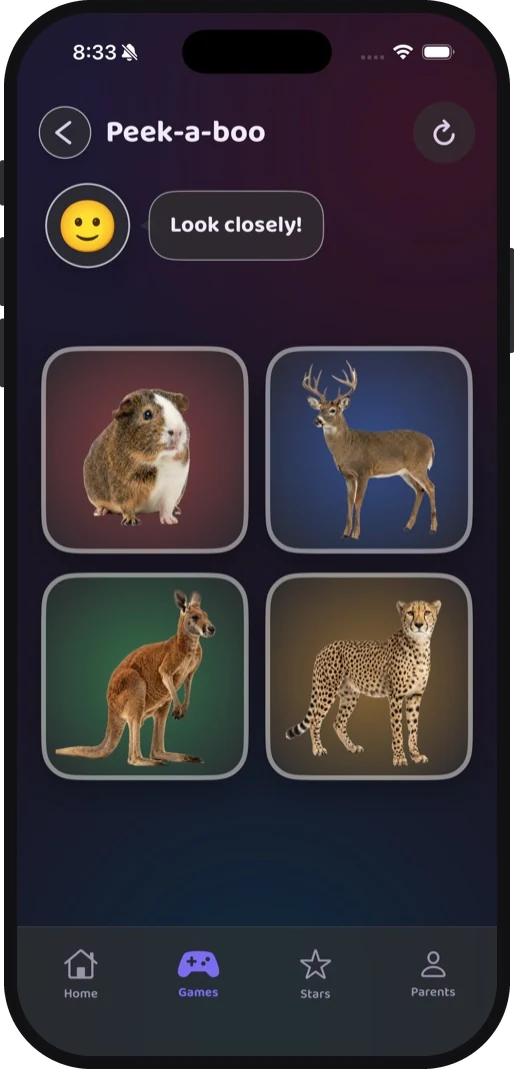
Peek-a-boo.
Four friends appear, and a little voice says "Look closely!" Then somebody hides, and your child's job is to remember who.
Babies fall hard for peek-a-boo, and the reason is lovely: they are working out that things still exist when you cannot see them, and every reveal confirms it with a jolt of delight. By toddler age the game has a second job: holding a picture in mind while it is hidden is memory doing push-ups. We just gave the oldest game there is real photographs and a voice.
What your child gains: a memory that holds on, and the calm certainty that things which disappear come back.
Magic Hats.
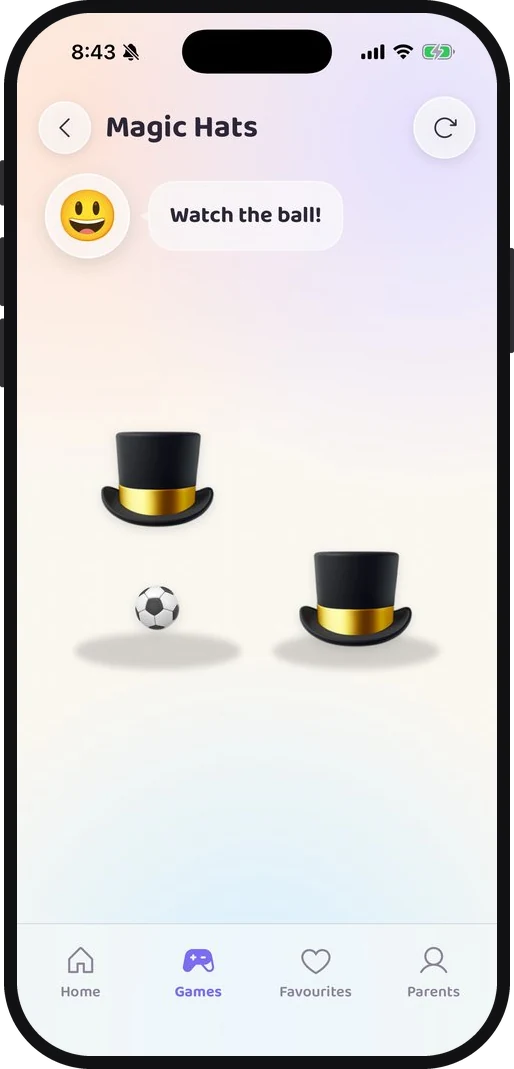
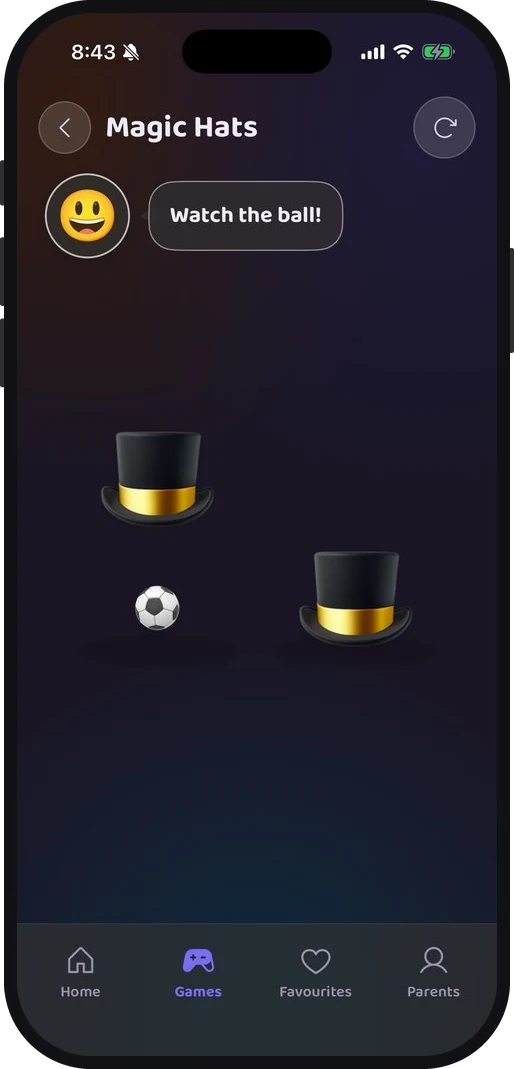
A ball slips under a hat, the hats shuffle, and your child points at where it ended up. You have played this on a street corner; your toddler is meeting it for the first time.
Magic Hats is Peek-a-boo's harder sibling. Peek-a-boo asks whether a hidden thing still exists; Magic Hats asks where it went while you could not see it. Following an invisible ball through moving hats means holding it in mind and updating that picture with every swap, which is tracking, attention and memory working the same trick at once. It is also the one game here your child will try to beat you at, and you should let them.
It starts gently: two hats and one slow swap. Three first-try wins in a row bring a third hat, then a fourth, and the shuffles grow longer and quicker as they go. Two misses and it eases back a step, so the game stays just hard enough and never harder.
What your child gains: focus that stays put, and a working memory that can follow a thing it cannot see.
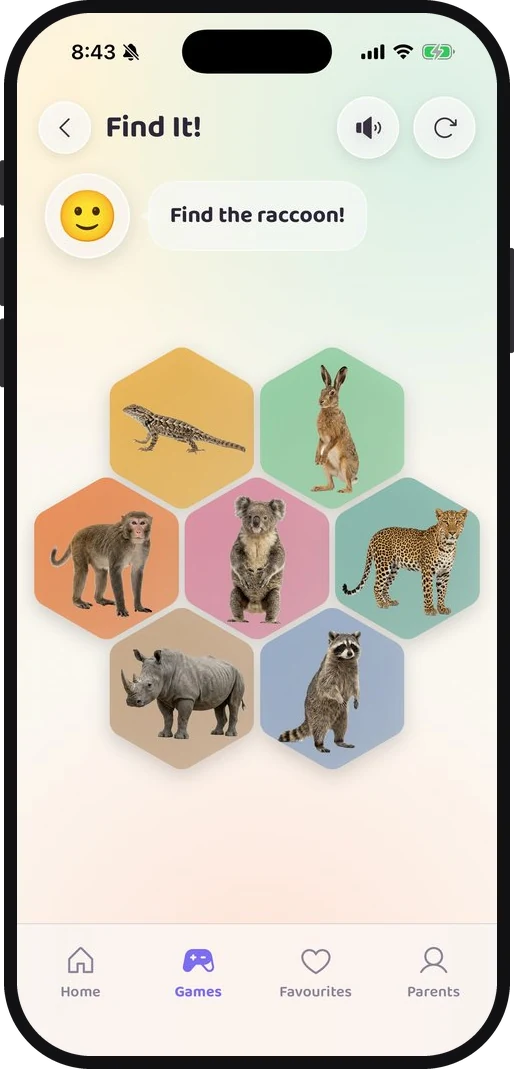
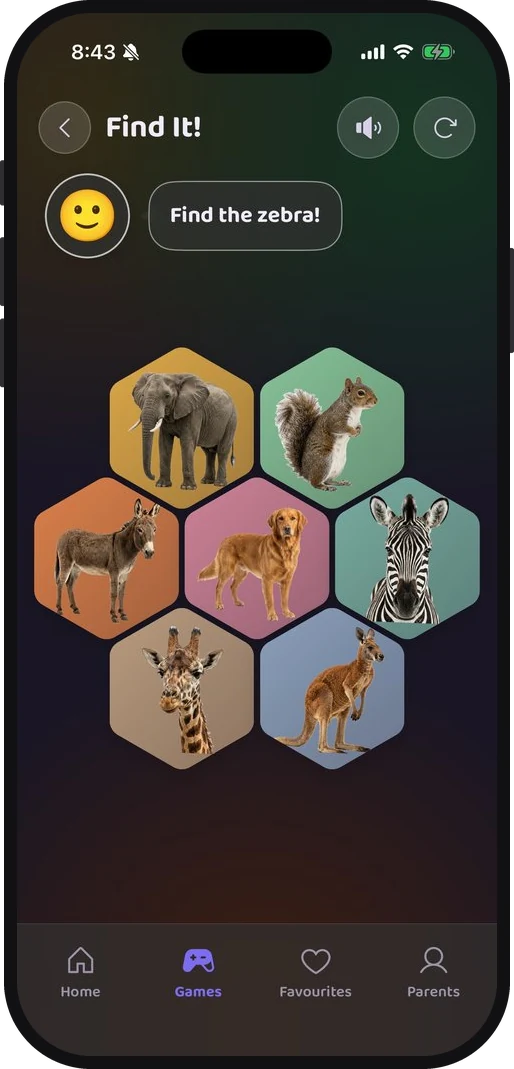
Find It.
The game asks for one thing by name, and your child finds its picture. That is the whole game, and it is quietly the most important one here.
Long before children say a word, they understand it. Comprehension runs ahead of speech through the whole toddler period, which means a child who cannot yet say "elephant" can absolutely find one, and finding it is real progress you can watch. Find It plays entirely on that hidden half of language, the half a word count never shows you.
What your child gains: more words understood, weeks before they are spoken, and the habit of listening for them.
Puzzle.
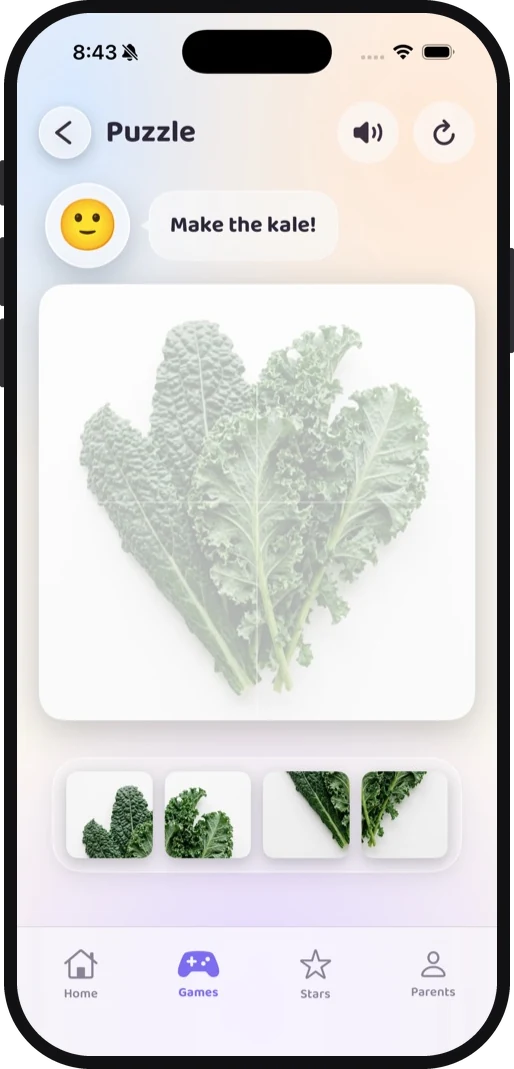
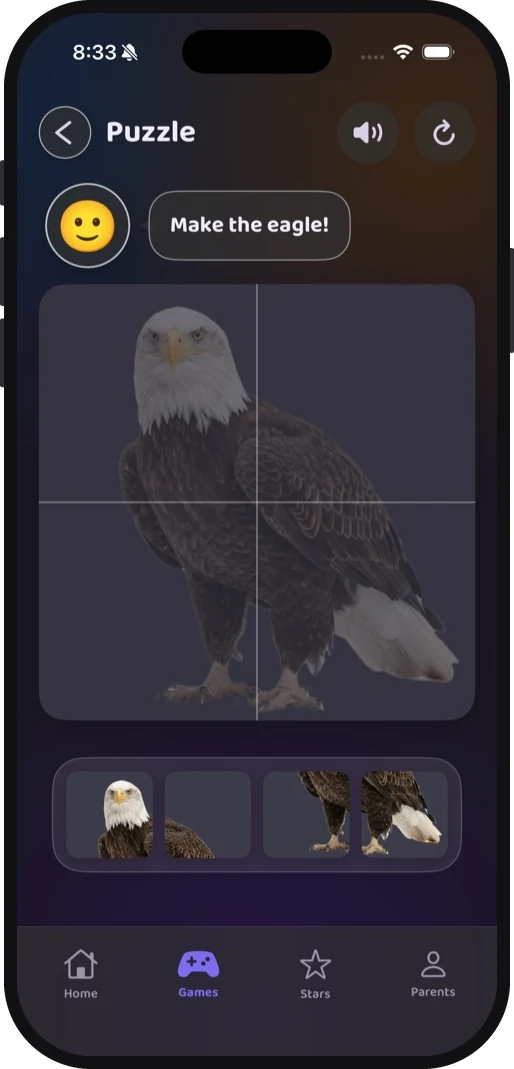
A photograph waits as a faint outline, its pieces sit below, and the voice asks for something no toddler refuses: "Make the kale!"
Puzzles earn their reputation. When researchers followed two to four year olds at home, the children who played with puzzles were later better at mentally rotating and transforming shapes, a skill that keeps paying off all the way into school maths. Ours stay small on purpose: a few large pieces, one clear photograph, done in a minute.
What your child gains: spatial thinking that will one day do maths, and the quiet pride of finishing a thing.
Pairs.
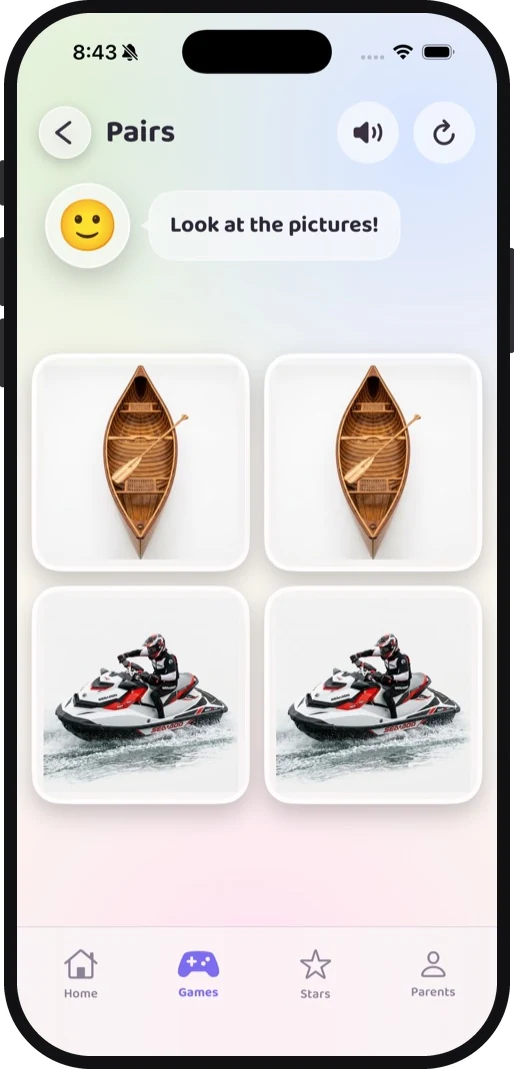
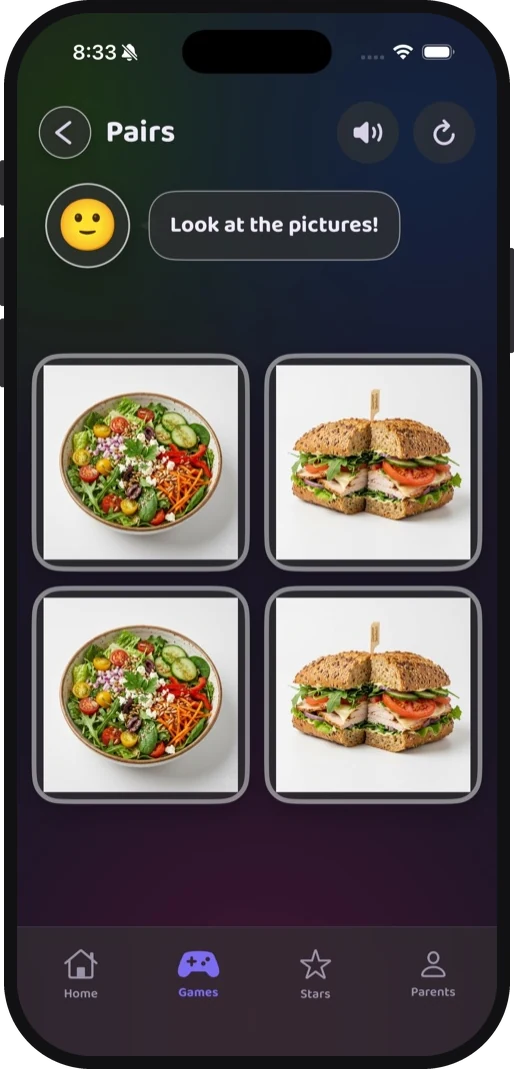
Look at the pictures, then find the two that match. Matching looks trivial to an adult, which is exactly why it is easy to miss what it is teaching.
To pair two pictures a child has to decide what "the same" even means: same shape, same colour, same thing photographed from the same side. That is visual discrimination, the skill of noticing small differences, and reading will lean on it later: b and d are, after all, the same shape flipped. Pairs is that skill with the difficulty turned all the way down and the pictures turned all the way up.
What your child gains: sharp eyes for small differences, which is where telling letters apart begins.
Listen.
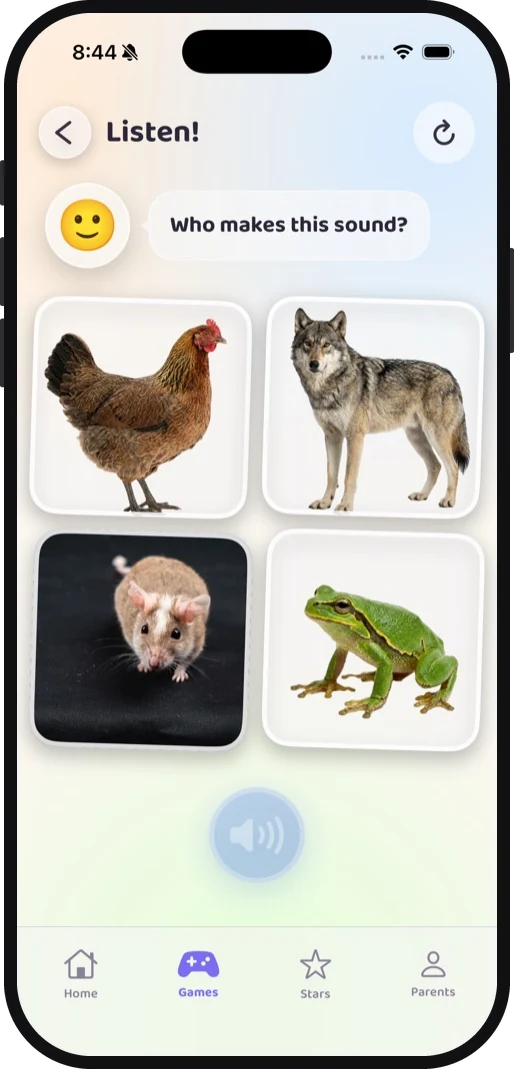
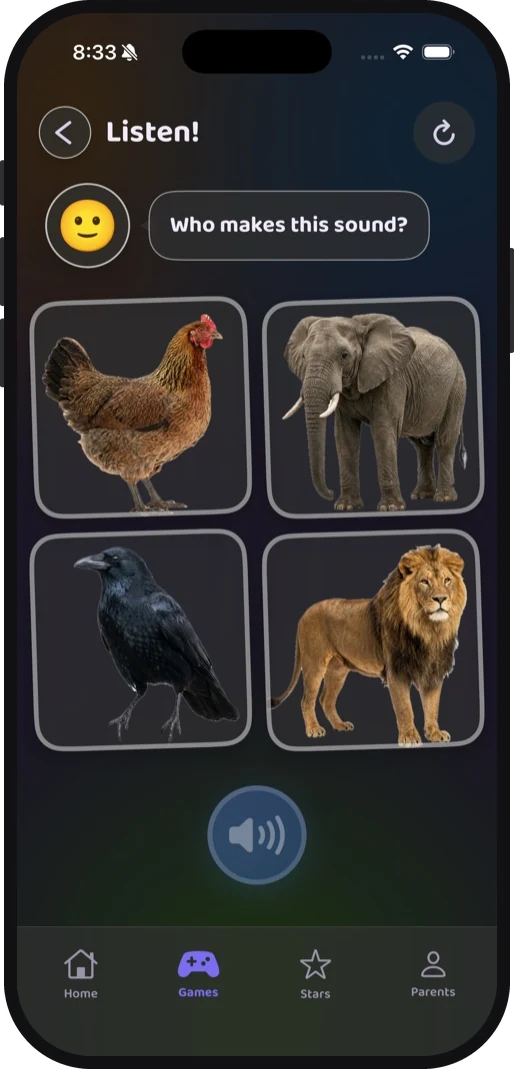
A sound plays, a real one, recorded from the animal itself, and the voice asks: "Who makes this sound?"
Ears come before words. Telling a hen from a wolf from a frog is auditory discrimination, the same listening-closely muscle a child will later point at the small differences between spoken words. We use real recordings for the same reason our cards use real photographs: the closer the stand-in is to the real thing, the better a toddler carries the learning back into the world.
What your child gains: careful ears, and the day at the park when they hear a crow and name it before you do.
What's Next?.
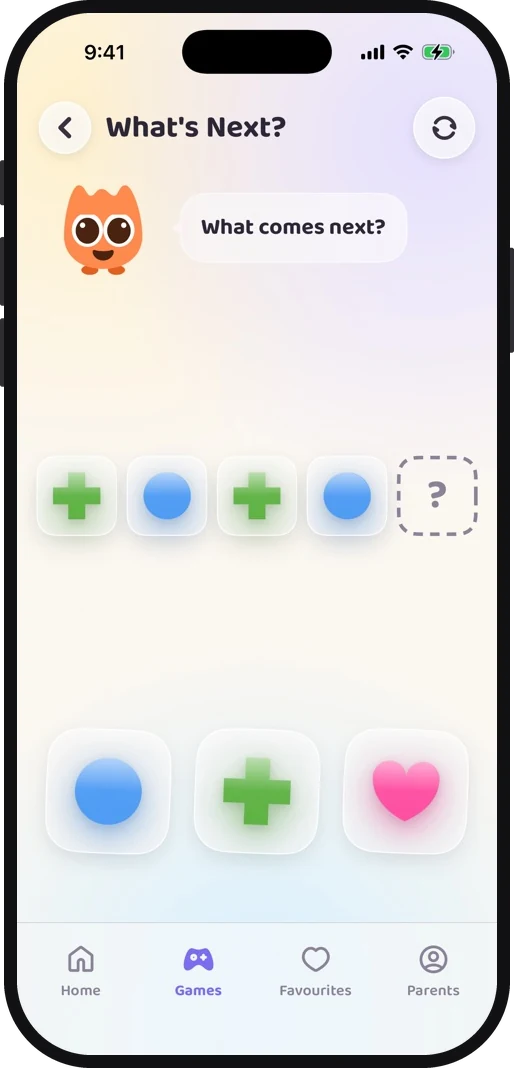
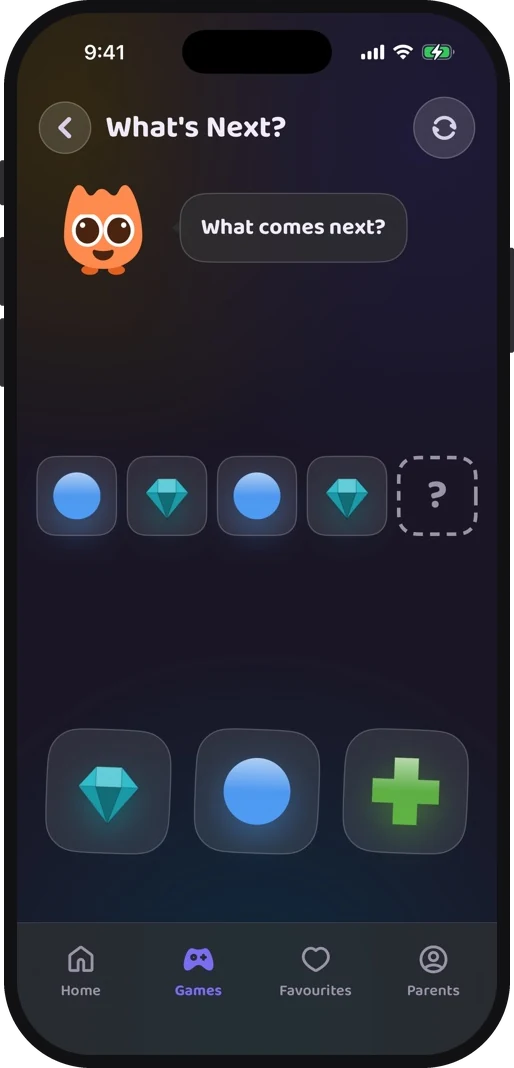
A row of shapes repeats and then stops, and your child taps the one that comes next.
Spotting that red-blue-red-blue carries on the same way is the first time a child uses a rule to predict something, and patterning turns up again and again in research on early maths. The evidence there is mostly correlational, so we will not promise you a mathematician; we will say it is a good thing to play with.
What your child gains: the habit of finding the rule instead of guessing. More on this game.
Odd One Out.
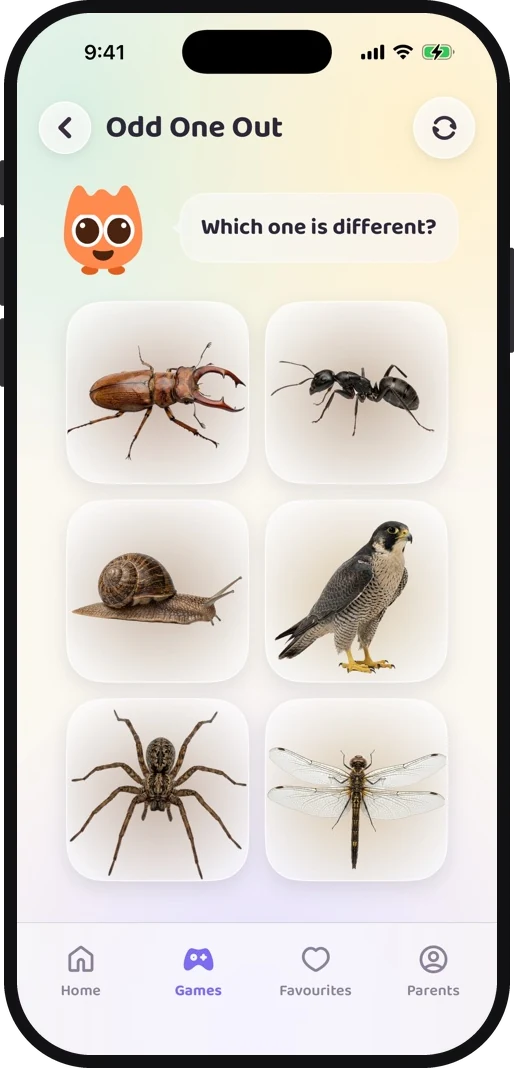
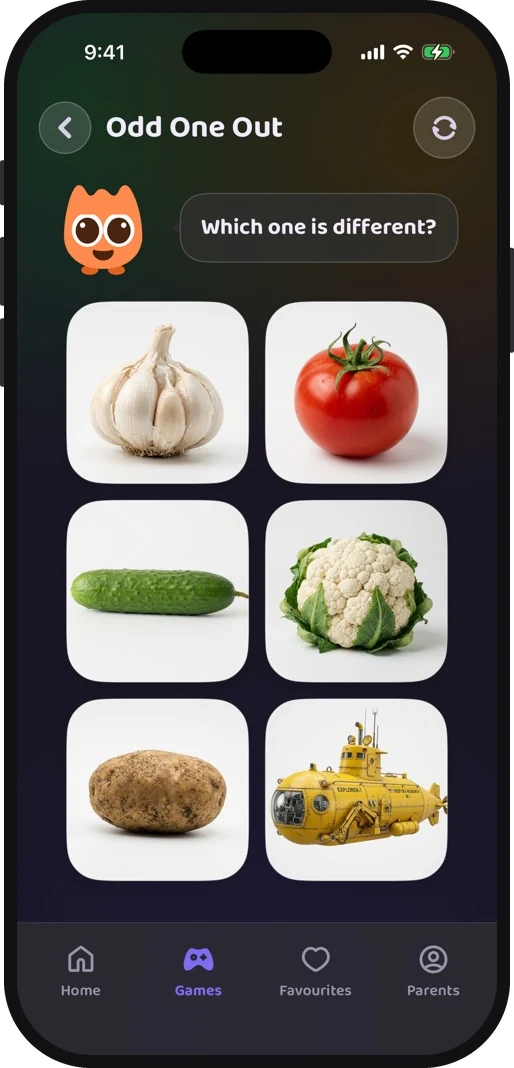
Four pictures, three of a kind and one stranger, and your child taps the stranger.
To find the odd one, a child has to hold a category in mind and test each picture against it. That is harder than matching, which only asks what is the same, and it is why a four year old will sometimes pick a different card and be right for a reason you had not thought of. Ask why before correcting.
What your child gains: categories that hold, and a reason behind the answer. More on this game.
Shadows.
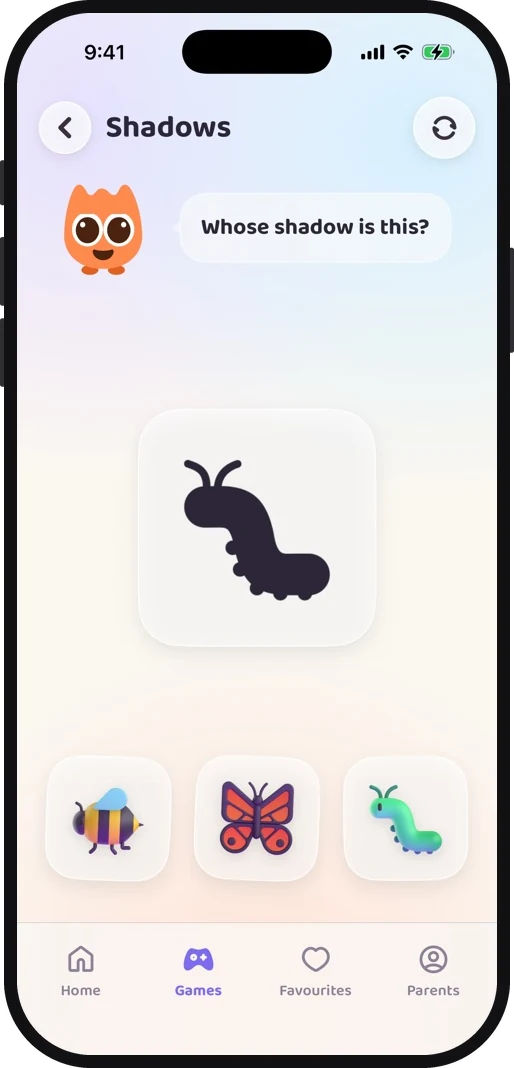
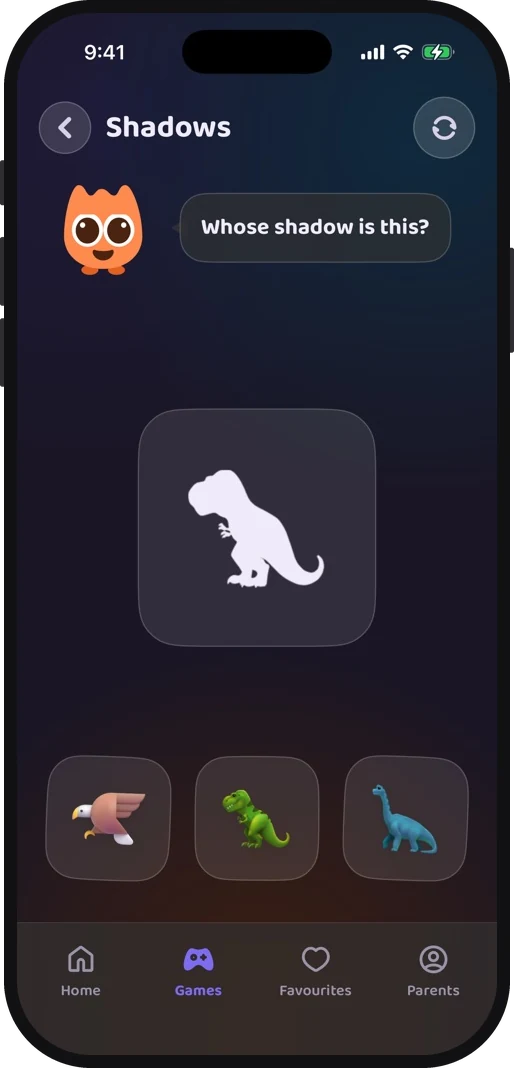
A black silhouette sits at the top, and your child taps the thing that cast it.
A shadow throws away colour, texture and detail and leaves only the outline, so shape has to carry the whole answer. Letters work the same way later, which is why nurseries like this game, though anyone telling you a silhouette game teaches reading is overselling it.
What your child gains: an eye for outline, which is where telling letters apart begins. More on this game.
How Many?.
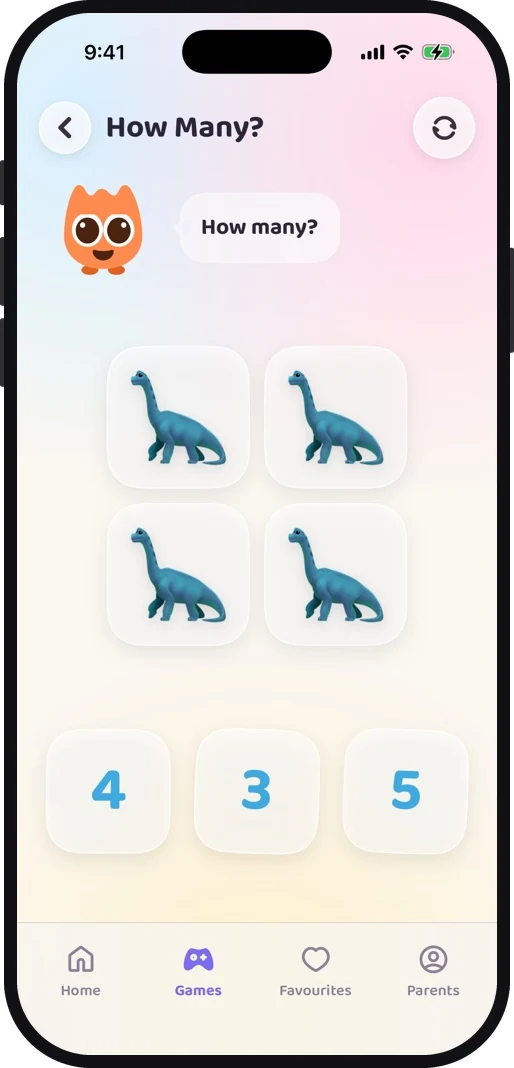
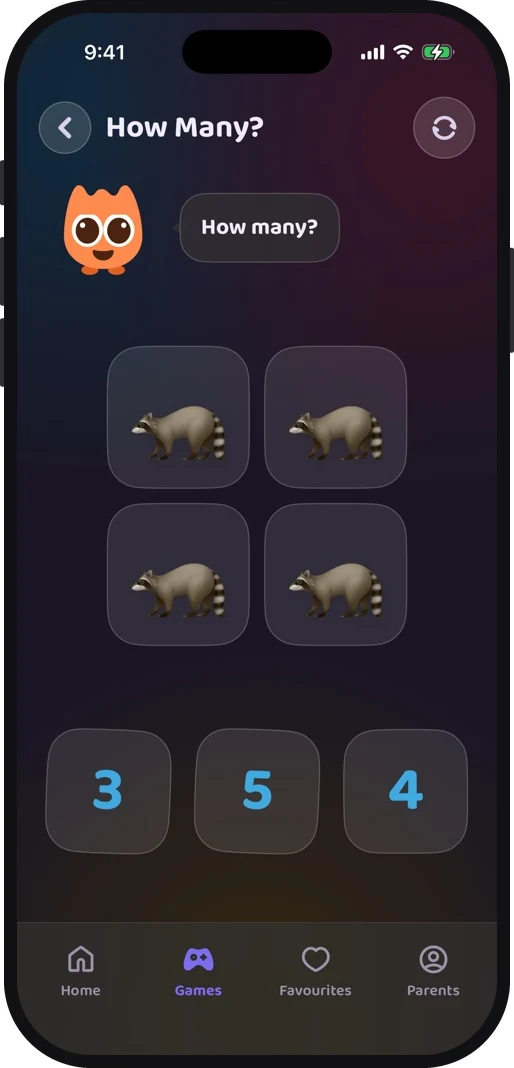
Things pop in one at a time, each with a rising blip, and your child taps the number.
Reciting one to ten is a song; knowing that the last number you said is the answer is the real thing, and it comes later. The game lives in the small numbers a child can see at a glance before it climbs, because five understood beats fifty recited.
What your child gains: numbers attached to amounts, not just to a tune. More on this game.
And no way to lose.
None of the ten has a timer or a game over. A wrong tap just is not the right one yet. At two, most wrong answers are wrong fingers, not wrong thinking, and a game that punishes them teaches a child to stop playing.
What right answers in a row do build is a streak, in the games and the quiz alike, and one wrong tap starts the count again. It is the gentlest score we could make: nothing is taken away but the number, and the app never scolds. The best streak is kept in the parents' corner, so you can watch focus and accuracy grow week by week without hovering over the session itself. And like everything else your child does in Wibbo, it is counted on your phone and stays there; nothing leaves the device.
The stars your child collects are there to go back to, not to chase. And the quiz behind the cards waits its turn: it never asks about a card your child has not opened, and a word has to come back right on three separate days before Wibbo calls it known. Spacing things out over days is one of the sturdiest findings in how anyone remembers anything, and it is the whole engine under the app.